
for Teens (ages 13-17)
Your Mental Health Matters
Teenage years involve a lot of change, as you're developing life skills and becoming more independent.
New stresses and worries can come along with change. Sometimes it can be hard to tell if what you're feeling is normal, or if you're experiencing symptoms of a mental health condition.
So many people have been where you are, and there are people who can and want to help you. Letting someone know how you're feeling is the first step.

Teen Support Group
A free, activity-based group for teens (ages 13-17) seeking support, compassion, and education for their mental health journey. Formal diagnosis is not required.
The Teen Support Group coincides with the Family Support Group at Baptist.
- 1st & 3rd Tuesdays
- 6:30- 8:00 pm
- Wolfson Children's Hospital
Dreams Come True Room - 1st Floor
800 Prudential Drive
Jacksonville, FL 32207
- Park in P2 Garage, Level 3, and take the elevator to B (Bridge Level)
- First-time participants must arrive 20 minutes early with a parent/guardian to complete registration.
Teens and Mental Health
If you have concerns about your mental health, you are not alone. According to the CDC's Youth Mental Health Status Data:
- 1 in 3, or 29% of U.S. high school students reported their mental health was not good most of the time or always during the past 30 days. Poor mental health included stress, anxiety, and depression.
- 2 in 5, or 40% of U.S. high school students reported experiencing symptoms of depression — felt so sad or hopeless every day for two or more weeks in a row that they stopped doing some usual activities in the past 12 months.
- 1 in 5, or 5.3 million adolescents ages 12-17 have a current, diagnosed mental or behavioral health condition, according to the CDC.
NAMI Teen Mental Health Survey
A NAMI survey asked teens ages 12-17 about their own mental health. The poll found that most teens are comfortable talking about mental health, but often don’t start the conversation. Learn more about the key survey findings on NAMI.org

Click image to enlarge or download
COVID-19's Impact on Youth and Young Adults: 2020 By the Numbers
Youth and young adults experienced a unique set of challenges during the COVID-19 pandemic — isolation from peers, adapting to virtual learning, and changes to sleep habits and other routines. It's important to understand the significant impact of these experiences on young people’s mental health — and the importance of providing the education, care and support they need.

Click image to enlarge or download
When To Ask For Help
Everyone has bad days. But it’s important to speak up if it feels like all your days are bad days, or if you’re struggling with feelings, emotions, thoughts or behaviors that:
- Are too intense or cause too much distress.
- Last more than two weeks.
- Interfere with daily life, school or work.
- Cause difficulties sleeping, eating, concentrating, enjoying things, or relating to others.
- Lead you to withdraw from friends and social activities.
- Are accompanied by the misuse of alcohol or drugs, thoughts of self-harm, or aggressive behaviors.
- Repeat in similar patterns.
- Lead to dangerous behavior or risky decisions.
If you have concerns about your mental health, or are experiencing symptoms that are affecting your everyday life, it’s important to tell someone how you’re feeling.
Who To Talk To
Talk to a parent, guardian, or adult you trust, including close family friends, teachers, school counselors, coaches, club leaders or faith leaders. Sometimes, an older sibling, grandparent, aunt or uncle is easier to talk to than a parent.
This should be a person who:
- Gives good advice when you ask for it.
- Respects your need for privacy so you can tell them anything.
- Lets you talk freely about your feelings and emotions without judging, teasing, or criticizing.
- Helps you figure out what to do the next time a difficult situation comes up.
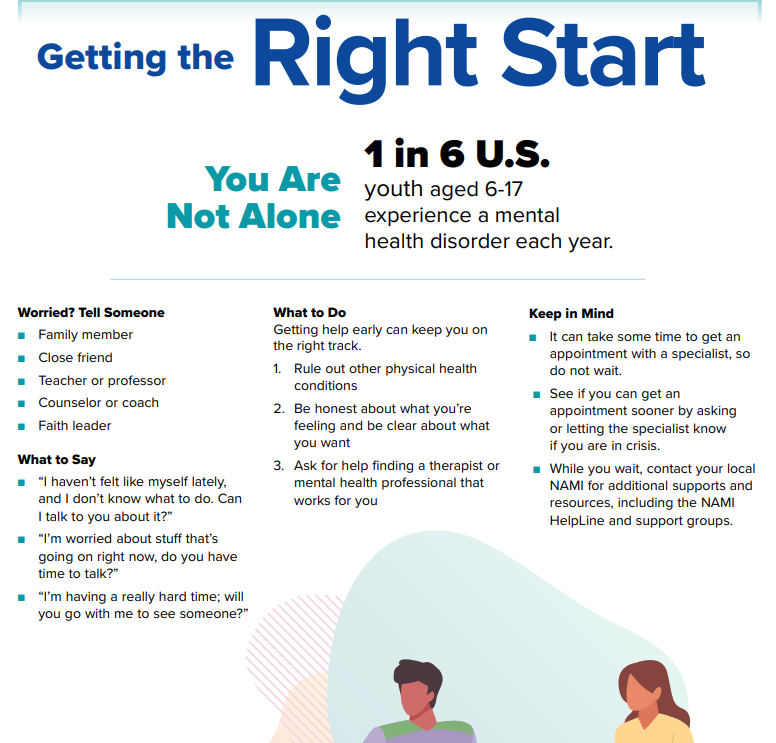
Click image to enlarge or download
Tips On How To Ask For Help
Asking for help is hard. It’s normal to feel uncertain or awkward about sharing something personal, like concerns about your mental health. A little planning can make the conversation easier, and you’re likely to get better results.
Visit NAMI.org for tips on how to talk to your parents or guardian.

.svg)
.svg)
.svg)
.svg)